May 24, 2026 · CarpetPros
Chimney Safety: Why an Annual Sweep Matters
- Chimney Sweep
- Home Safety
- Home Maintenance
A wood-burning fireplace is one of the best things about a cold Virginia evening — and one of the most overlooked safety items in the house. The reason a chimney needs an annual sweep comes down to one word: creosote. Here’s what it is, why it’s dangerous, and when to get the flue cleaned before you light the first fire of the season.
What creosote is — and why it’s dangerous
Every time you burn wood, the smoke leaves behind a tarry, flammable residue called creosote on the inside of the flue. It builds up layer by layer over a burning season. Once there’s enough of it, a hot fire or a stray spark can ignite it — and a chimney fire can reach well over 2,000°F, crack the flue liner, and spread into the home’s structure.
Creosote buildup is the leading cause of chimney fires, and the buildup is invisible from the living room. That’s exactly why a yearly professional sweep matters: it removes the fuel before it can catch.
Warning signs your chimney needs attention
- A strong, smoky or tar-like smell from the fireplace, especially in humid weather.
- Poor draft — smoke rolling back into the room instead of up the flue.
- A black, flaky or shiny tar-like coating visible inside the firebox or flue.
- Soot falling into the firebox.
- Animals, nests, or debris (a common off-season problem).
If you see any of these, hold off on burning until it’s been swept and inspected.
How often, and when to book
- Sweep: once a year for a fireplace in regular use. Heavy burners may need it more often.
- Inspect: annually, too — a sweep is also the chance to catch a cracked liner, a failing cap, or a blockage.
- Best timing: late summer through fall, before burning season. That’s when you want a clean, safe flue — and it’s before the rush when everyone remembers their fireplace on the first cold night.
What a professional sweep covers
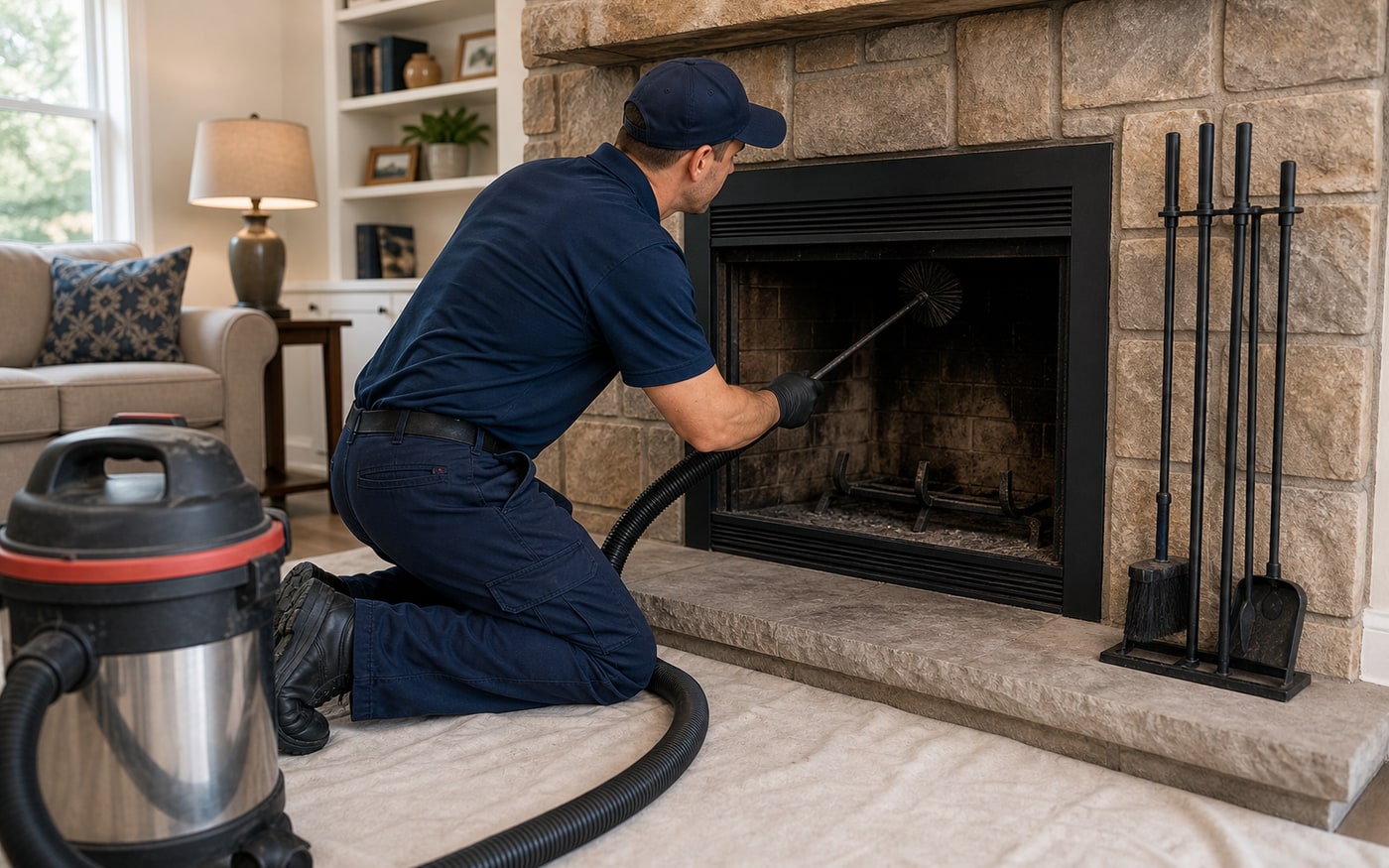
A proper chimney sweep removes creosote and debris from the flue, clears the firebox, and checks for the obvious safety problems — buildup, blockages, animal intrusion, and visible damage — so you head into winter knowing the fireplace is safe to use. We protect your floors and furnishings while we work, so there’s no soot left behind in the room.
Don’t wait for the first cold night
The safest fireplace is a maintained one, and an annual sweep is cheap insurance against the worst-case scenario. Many older homes across our Richmond and Virginia Beach service areas have masonry fireplaces that benefit from a yearly clean — get on the schedule before burning season starts. Book online or give us a call.