
June 3, 2026 · CarpetPros
How to Get Pet Odor and Stains Out of Carpet
- Carpet Cleaning
- Pet Stains
- Pet Odor
- Tips
The fast answer: to truly remove pet odor you have to break it down at the source, not cover it up. For a fresh accident, blot up as much liquid as possible, rinse with cool water, then treat with an enzyme cleaner. For a set-in stain, the urine has usually soaked into the backing, pad, and sometimes the subfloor — that needs professional hot-water extraction with enzyme pet treatment, and occasionally pad replacement. Pets are family, but pet accidents are one of the most stubborn cleaning problems homeowners face. Here’s why they’re so persistent, and what actually works.
Fresh vs. set-in stains — treat them differently
These are two very different problems:
- Fresh accidents are still mostly on the surface. Speed is everything — the faster you absorb and rinse, the less soaks down into the backing and pad.
- Set-in stains have dried and wicked deep. The liquid carried odor compounds into the carpet backing, the foam pad, and sometimes the wood or concrete subfloor beneath. Surface cleaning can’t reach any of that, which is exactly why the smell comes back.
Why pet odors keep coming back
When a pet urinates on carpet, the liquid soaks past the surface into the backing and the pad underneath. As it dries, the urine leaves behind crystallized salts (uric acid crystals). These crystals are the real problem: they’re not water-soluble, so plain water and most household cleaners just rinse around them and leave them in place.
Then humidity arrives — something Richmond summers deliver in abundance — and moisture reactivates those crystals, releasing the odor all over again. That’s why a spot can smell fine in winter and then “come alive” on a humid day months later. Worse, pets are drawn back to spots that still smell faintly like them, which can turn one accident into a repeat problem in the same place.
What to do right away (fresh accidents)
- Blot, don’t rub. Press a clean towel or paper towels to absorb as much liquid as possible. Stand on the towel for extra pressure. Rubbing spreads the stain and frays the fibers.
- Rinse with cool water and blot again. Repeat until the towel comes up nearly clean.
- Apply an enzyme cleaner generously — enough to reach as deep as the urine did — and let it dwell per the label (often 10+ minutes).
- Blot dry and let it air-dry; weigh down a clean towel over the spot to keep wicking moisture up as it dries.
Why enzyme cleaners work (and most cleaners don’t)
Regular cleaners mask odor or lift surface color, but they don’t destroy the uric acid crystals. Enzyme cleaners contain specialized enzymes and beneficial bacteria that actually digest the organic compounds — including those crystals — and convert them into odorless byproducts. Two keys to making them work:
- Use enough. The enzymes have to physically reach every spot the urine reached. A light spritz on a stain that soaked into the pad won’t cut it.
- Give them time. Enzymes work slowly. Let the area stay damp for the full dwell time; don’t rinse it away early.
Find hidden spots with a blacklight
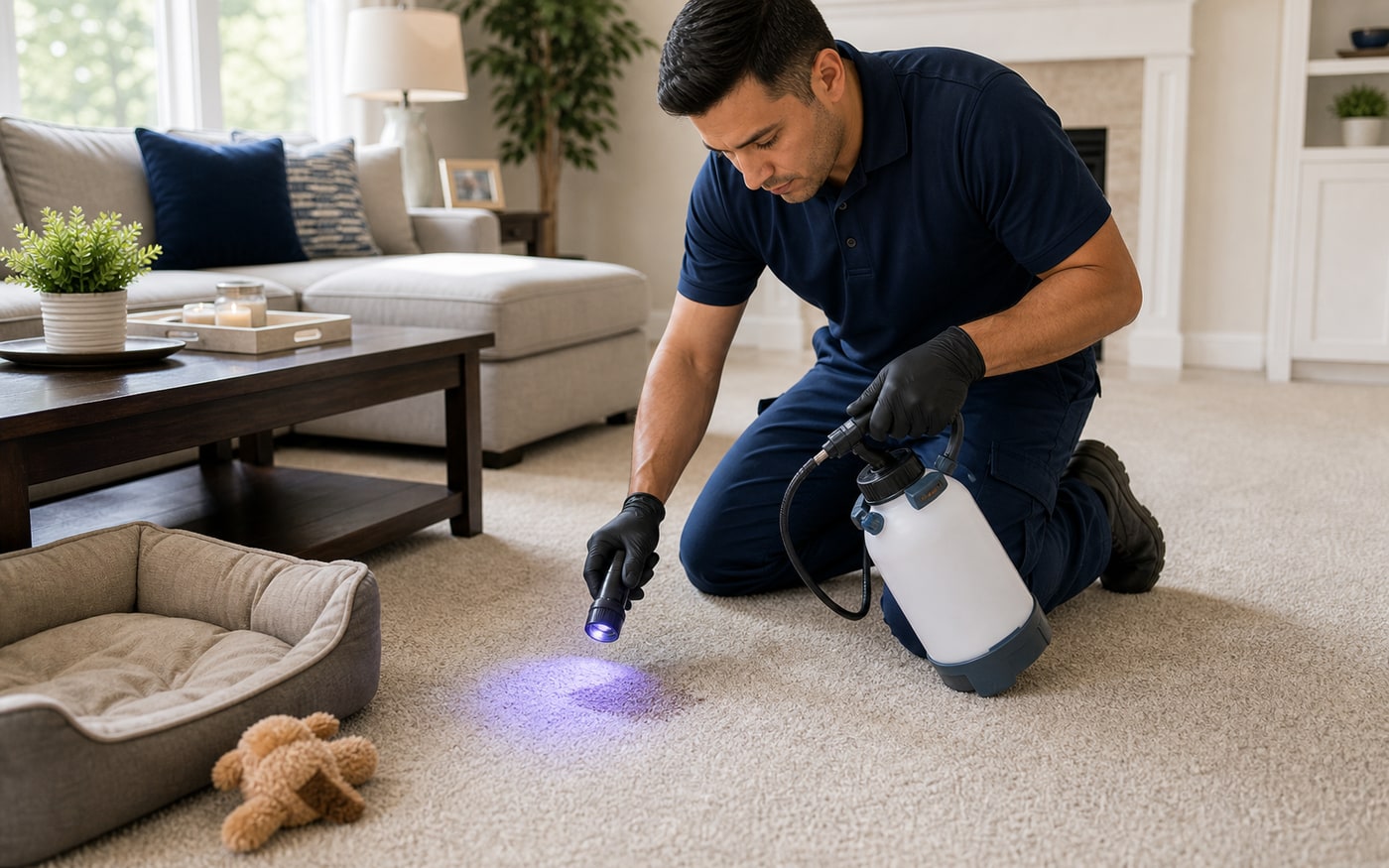
If you can smell urine but can’t see the stain, a UV blacklight in a dark room will make dried urine glow (usually a dull yellow-green). It’s the easiest way to map every spot before you treat — and it often reveals far more than you expected, especially around favorite corners and along walls.
What NOT to use
- Don’t use heat or steam on a fresh protein stain. Heat can permanently set urine, blood, and other protein stains into the fibers. (Professional hot-water extraction is different — it’s used after an enzyme treatment has broken the stain down.)
- Don’t rely on vinegar to remove odor. Vinegar can help with some smells temporarily, but it doesn’t destroy uric acid crystals, so the odor returns. It’s a myth that vinegar “neutralizes” pet urine for good.
- Never use ammonia-based cleaners. Ammonia smells like urine to a pet and can actually attract them back to re-mark the spot.
- Skip bleach and other harsh chemicals, which can damage fibers, bleach color, and create dangerous fumes.
When DIY fails and you need a pro
DIY handles fresh, minor accidents. Call a professional when you’re dealing with:
- Odors that return after you clean
- Multiple or repeat accident spots
- Stains that have set in over time
- A whole room or home that smells “like a pet” even when it’s clean
For set-in cases, the fix goes deeper than the carpet face. Professional pet treatment uses enzyme solutions plus deep hot-water extraction to flush odor out of the fibers and backing. For the worst cases, the affected carpet pad may need replacement and the subfloor sealed so trapped urine can’t keep off-gassing — we’ll inspect, show you what we find, and tell you upfront what it will take. If accidents have damaged seams or stretched areas, a carpet repair visit can restore them in the same trip.
One thing many homeowners miss: if a pet smell lingers throughout the house and not just at the spots, it’s often circulating through your HVAC. An air duct cleaning clears dander and odor from the ductwork so the whole-home smell actually resets.
Preventing the next accident
- Clean accidents fully the first time so no scent marker is left to lure repeats.
- Keep an enzyme cleaner on hand for immediate treatment.
- Blacklight problem areas a couple times a year to catch spots early.
- Use washable, absorbent mats in a pet’s favorite resting and door areas.
- For senior pets or new puppies, consider professional pet treatment as part of your annual carpet cleaning.
FAQ
Does vinegar really remove dog or cat urine? It can mask a fresh smell briefly, but it doesn’t break down the uric acid crystals, so the odor comes back. An enzyme cleaner is what actually destroys the source.
Why does the smell return on humid days? Dried urine leaves salt crystals in the carpet, pad, and subfloor. Humidity reactivates them and releases the odor — common in Central Virginia’s muggy summers.
Can professional cleaning get out old, set-in pet urine? Usually yes. Hot-water extraction with enzyme pet treatment removes most set-in odor. Severe cases may also need pad replacement and subfloor sealing, which we’ll flag during inspection.
Is steam cleaning safe for pet stains? Yes — once the stain is treated with enzymes first. Don’t apply household heat or steam to a fresh, untreated protein stain, as heat can set it permanently.
If you’re dealing with odors that won’t quit, it’s worth a professional carpet cleaning with pet treatment. We target the odor at the source rather than covering it up, so your home actually smells clean. See our pricing — pet treatment is one of our most-requested add-ons — or book online in minutes.