
June 9, 2026 · CarpetPros
Wet Carpet? What to Do After Water Damage (Step-by-Step)
- Water Damage
- Carpet Cleaning
- Carpet Repair
- Guide
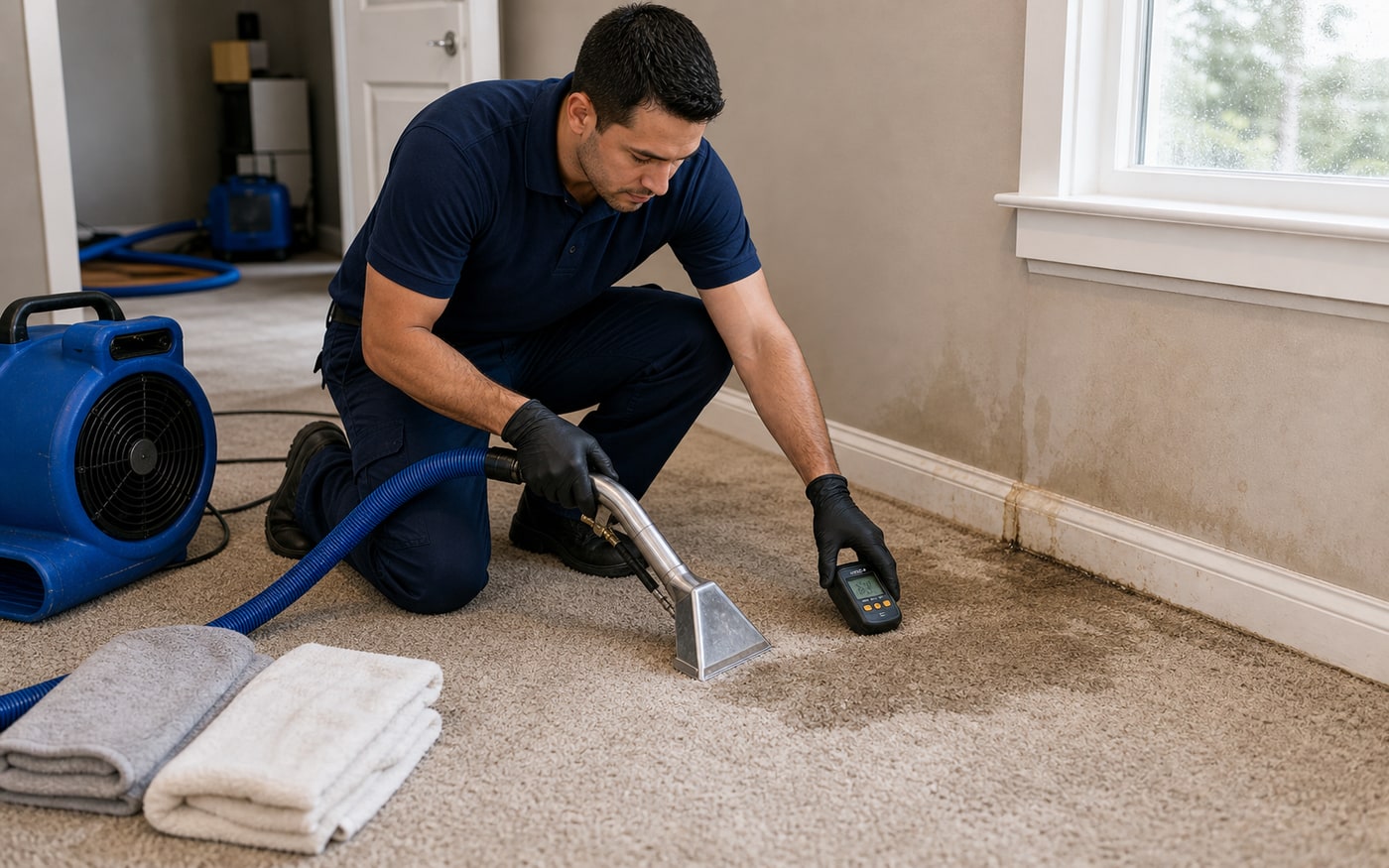
If your carpet is wet, act in the first 24–48 hours: stop the water at its source, lift furniture off the carpet, blot or extract as much water as you can, then run airflow and a dehumidifier to dry everything out. That window matters because mold can begin growing in damp carpet and padding within a day or two — so fast drying is what saves your floor.
Here’s the full step-by-step, plus how to tell when you can handle it yourself and when it’s time to call a pro.
Step 1: Stop the source of the water
Before you touch the carpet, cut off whatever is putting water on the floor.
- Burst or leaking pipe / supply line: shut off the water at the fixture’s valve, or the main shutoff for the house.
- Overflowing appliance (washer, water heater, dishwasher): turn it off and unplug it if you can do so safely.
- Roof or window leak: put a bucket under the drip and move what you can out of the way.
- Backed-up drain or sewage: stop using water in the house and treat it as contaminated (more on that below).
If there’s any chance water has reached outlets, wiring, or your electrical panel, kill the power to that area at the breaker before you walk on a soaked floor.
Step 2: Lift furniture and protect what’s on the carpet
Wet carpet wicks moisture into anything sitting on it, and wood or metal furniture legs can leave stains that are nearly impossible to remove.
- Move chairs, tables, and small furniture off the wet area entirely.
- For heavy pieces you can’t move, slide aluminum foil or a small wood block under each leg to break contact with the carpet.
- Pick up rugs, shoes, baskets, and anything that will hold water or bleed dye.
Step 3: Get the water out — blot and extract
Now pull out as much water as possible. The faster you do this, the more likely your carpet and pad survive.
- Wet/dry shop vac is your best friend here — work in overlapping passes and empty it often.
- No shop vac? Blot with towels, pressing down with your weight; don’t rub, which damages fibers.
- For larger floods, you can rent a portable extractor — but if you’re scooping water by the bucket, it’s already a job for professional equipment.
The goal is to get the carpet from “soaked” to “damp” as quickly as you can.
Step 4: Maximize airflow and dehumidify
Drying isn’t done when the surface feels dry — moisture hides in the padding and subfloor underneath.
- Open windows on a dry day and set up fans aimed across the carpet (not just down at it).
- Run a dehumidifier in the room with the door closed to pull moisture out of the air.
- If the pad is soaked, lift a corner of the carpet so air can reach underneath — this is often where mold starts.
- Keep it running for at least 24–72 hours and check daily for any musty smell.
Clean water vs. contaminated water — know the category
Not all water damage is equal, and this determines whether you should DIY at all.
- Clean water (Category 1): a broken supply line, an overflowing sink, or rainwater through a window. Generally safe to dry and clean yourself if you act fast.
- Gray water (Category 2): washing-machine or dishwasher discharge, or water that’s sat long enough to grow bacteria. Cleanable, but it needs sanitizing.
- Black water (Category 3): sewage backups, toilet overflow with waste, or floodwater from outside. Do not DIY this. It carries bacteria and contaminants, and carpet exposed to it usually has to be removed and replaced — not just cleaned.
When in doubt about the category, stop and get professional help. Some water exposure is a health issue, not just a flooring one.
Can the carpet and pad be saved — or do they need replacing?
It depends on the water category and how long the carpet stayed wet.
- Likely saveable: clean water, extracted and dried within 24–48 hours. The carpet usually cleans up fine, and the pad may dry if airflow reaches it quickly.
- Pad often replaced: padding holds water like a sponge and dries slowly. After a significant soak, replacing the pad is frequently cheaper and safer than gambling on hidden mold.
- Carpet replaced: anything soaked by black water, carpet that stayed wet for days, or carpet that smells musty after drying. Once mold is in the backing, cleaning won’t fully fix it.
Why professional extraction, drying, and sanitizing matter
Even after a careful DIY effort, water can leave behind problems you can’t see. Professional carpet cleaning after water exposure does three things a shop vac and box fan can’t:
- Hot-water extraction rinses out the dissolved soil, minerals, and any contaminants the water carried into the fibers, then pulls the moisture back out.
- Proper drying addresses the pad and subfloor, not just the surface, so you don’t trap dampness underneath.
- Sanitizing and deodorizing treats the bacteria and musty odor that water leaves behind — important for gray-water situations and pet-affected areas.
A surface-dry carpet that smells fine today can turn musty in a week if the base never fully dried. Extraction plus real drying is what prevents that.
Fixing ripples and delamination after a soak
Carpet that’s been wet often doesn’t lie flat again on its own. Soaking can cause the backing to separate (delamination) or the carpet to loosen and ripple or buckle as it dries. That’s not just cosmetic — loose carpet is a trip hazard and wears out faster at the wrinkles.
Professional carpet repair and re-stretching pulls the carpet taut again and re-secures it, getting rid of the waves and lumps a flood leaves behind. If a section is too damaged to save, a patch from a closet or leftover remnant can blend in seamlessly.
Preventing mold and lingering odor
Mold and musty smell are the long-term enemies after water damage. Beyond fast drying:
- Don’t lay furniture or rugs back down until the carpet and pad are completely dry.
- If a musty smell appears days later, that’s hidden moisture — address it immediately rather than masking it.
- Have the area professionally cleaned and sanitized once it’s dry to remove anything the water left in the fibers.
FAQ
How long does it take for mold to grow in wet carpet? Mold can start developing in 24–48 hours in damp carpet and padding. That’s why fast extraction and drying are so important.
Should I throw away the carpet pad after it gets wet? Often yes. Padding holds water and dries slowly, so after a real soak it’s frequently safer and cheaper to replace it than to risk mold underneath your carpet.
Can carpet be saved after a flood? Carpet soaked by clean water and dried within a day or two can usually be saved and cleaned. Carpet hit by sewage or outside floodwater (black water) typically needs to be replaced.
Why does my carpet smell musty after it dried? That smell means moisture is still trapped in the pad or subfloor. It needs professional extraction, drying, and sanitizing to fully resolve.
Get your carpet dried, cleaned, and back to normal
Act fast on your own first — stop the water, extract what you can, and get air moving. Then let us handle the deep clean and repairs. CarpetPros offers same-week scheduling and easy online booking for professional carpet cleaning and carpet repair and re-stretching across Richmond, Virginia Beach, and Raleigh. Carpet cleaning starts from $110 and repairs from $150 — and you’ll get an upfront quote before any work begins. See our pricing or book online today.