
June 9, 2026 · CarpetPros
The Complete Carpet Stain Removal Guide (Common Household Stains)
- Carpet Cleaning
- Stain Removal
- Guide
- DIY
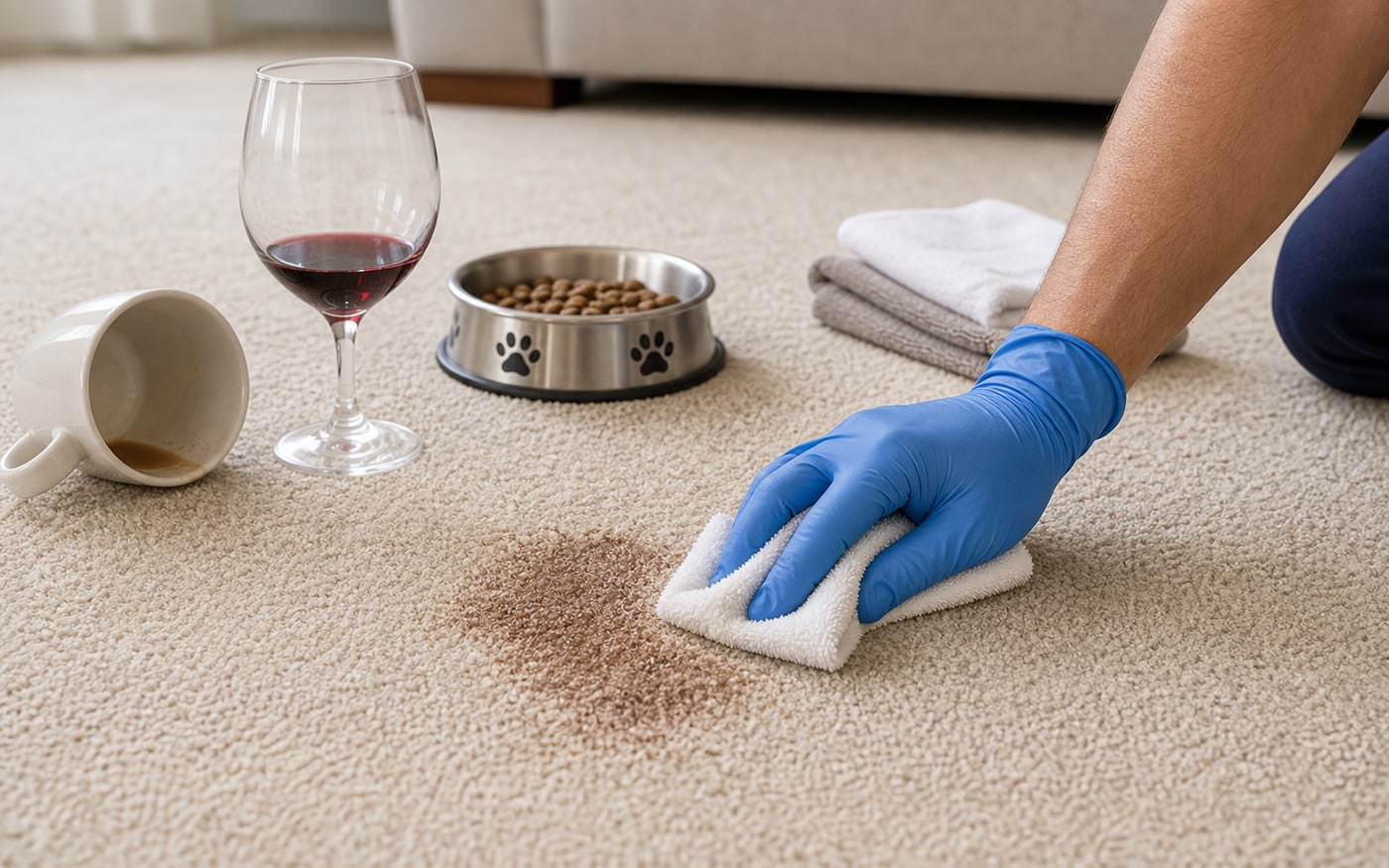
For almost every carpet stain, the golden rule is the same: blot, don’t rub, and act fast. Lift away the spill from the outside in with a clean white cloth, apply the right solution for that stain type, and blot again. Rubbing pushes the stain deeper and frays the fibers — patient blotting is what actually pulls it out.
Below is a quick general method, then targeted steps for the 12 most common household stains, what to avoid for each, and when it’s time to stop and call a professional.
The universal approach (works for most stains)
- Blot up the excess immediately with a dry white cloth or paper towel — work from the edges toward the center so you don’t spread it.
- Test your cleaner on a hidden spot (a closet corner) first to make sure it won’t bleach or damage the carpet.
- Apply a mild solution — usually a teaspoon of dish soap or white vinegar in a cup of cool water — to the cloth, not poured onto the carpet.
- Blot, don’t scrub. Repeat with a fresh part of the cloth until the stain lifts.
- Rinse by blotting with plain cool water, then dry by pressing with towels and aiming a fan at the spot.
Keep a white cloth so you can see how much color is transferring out. Now, the specifics.
1. Red wine
DIY: Blot up the excess, then apply cool water with a splash of dish soap and a little white vinegar. Blot repeatedly. For stubborn spots, a small amount of hydrogen peroxide (tested first) can help on light carpet. Avoid: Hot water, which sets the tannins. Don’t pour salt mountains on it and walk away — blot while it’s still wet.
2. Coffee or tea
DIY: Blot, then treat with cool water, a drop of dish soap, and a splash of white vinegar. These are tannin stains, so repeat patiently rather than soaking the carpet. Avoid: Hot water and bleach-based cleaners, which can leave a yellow halo behind.
3. Pet urine
DIY: Blot up as much as possible, rinse with cool water, then use an enzyme cleaner made for pet messes — it actually breaks down the odor source rather than masking it. Avoid: Ammonia (it smells like urine to pets and invites repeat accidents) and steam/heat on the fresh spot, which can set the odor. For set-in or repeat accidents, see our dedicated guide on removing pet stains and odor.
4. Blood
DIY: Use cold water only. Blot with cold water and a little dish soap; hydrogen peroxide (tested first) can help on fresh stains. Avoid: Warm or hot water — heat cooks the proteins in blood and locks the stain in permanently.
5. Ink or marker
DIY: Dab (don’t soak) with isopropyl alcohol on a cloth, blotting as the ink transfers. Move to a clean part of the cloth each time so you’re not re-depositing ink. Avoid: Pouring alcohol directly on the carpet, and rubbing — both spread ink into a bigger mess.
6. Grease or oil
DIY: Sprinkle baking soda or cornstarch to absorb the oil, leave 15 minutes, then vacuum. Follow with a dish-soap solution (dish soap is made to cut grease) and blot. Avoid: Water alone — it just spreads the oil. Don’t scrub it deeper into the pile.
7. Mud and dirt
DIY: Let it dry completely first, then vacuum or scrape up the dried clumps. Treat any remaining shadow with dish-soap solution and blot. Avoid: Attacking wet mud — you’ll grind it in and double the stained area.
8. Candle wax
DIY: Harden the wax with an ice cube, then gently scrape off the chunks. For residue, lay a paper towel over it and warm with an iron on low so the wax transfers up into the towel. Avoid: A high iron setting and direct contact — too much heat scorches or melts synthetic fibers.
9. Chewing gum
DIY: Freeze it with an ice cube until brittle, then scrape it off with a dull edge. Dab any leftover residue with a little isopropyl alcohol. Avoid: Pulling at soft, warm gum — it stretches and works deeper into the fibers.
10. Nail polish
DIY: Blot fresh polish, then dab with non-acetone nail polish remover on a cloth, blotting frequently. Test on a hidden spot first. Avoid: Acetone on many synthetic carpets — it can dissolve or discolor the fibers. Don’t flood the area.
11. Makeup or lipstick
DIY: Gently scrape off solids, then dab with isopropyl alcohol or a dish-soap solution. Lipstick (oily) responds to the grease method; powder makeup vacuums up once loosened. Avoid: Rubbing colored makeup outward — work inward and blot.
12. Kids’ drinks and dye-based stains
DIY: Blot up the spill, then treat with cool water and dish soap. For brightly dyed drinks, repeat patiently; a tested dab of hydrogen peroxide can help on light carpet. Avoid: Hot water and colored cleaners. Dye stains are stubborn — if it isn’t lifting, stop before you spread it.
What NOT to do (no matter the stain)
A few mistakes turn a small spot into a permanent problem:
- Don’t use hot water on protein stains (blood, urine, egg, dairy) — heat sets them for good.
- Don’t over-wet the carpet. Soaking pushes the stain into the pad and can cause mold or musty odor. Apply solution to the cloth, not the floor.
- Don’t reach for harsh bleach or undiluted cleaners. They can strip color and leave a permanent light spot worse than the stain.
- Don’t scrub. Aggressive scrubbing untwists and frays the fibers, leaving a fuzzy “ghost” mark even after the color is gone.
- Don’t skip the spot test. Always check a hidden area first.
When to stop and call a professional
DIY handles most fresh spills. Call a pro when:
- The stain is set-in or old and won’t budge after a couple of careful attempts.
- It covers a large area or there are many spots throughout a room.
- It’s a dye-based stain (some drinks, hair dye, bright kids’ products) that keeps spreading.
- The carpet is wool, antique, or delicate — the wrong cleaner can ruin it, so leave it to a pro.
- You’ve already tried a few things and the spot is getting bigger or fuzzier.
Professional hot-water extraction carpet cleaning reaches the base of the fibers and rinses out what surface treatments leave behind — and we can add pre-treatment ($15–$25 per room) or pet treatment ($15–$35 per area) for the tough spots.
FAQ
What’s the best all-purpose carpet stain remover? A simple mix of a teaspoon of dish soap and a splash of white vinegar in cool water handles a surprising range of everyday stains. Always blot it on, never scrub it in.
Why does my stain keep coming back after it dries? That’s wicking — residue left deep in the carpet rises back to the surface as it dries. It usually means the spot was over-wet or not fully rinsed, and professional extraction resolves it.
Can old, set-in stains be removed? Sometimes, but the odds drop the longer a stain sits. Set-in and dye-based stains are best handled by a professional with the right solutions and equipment.
Is it safe to use bleach on carpet stains? No — bleach commonly removes the carpet’s own color, leaving a permanent light spot. Stick to mild, tested solutions or call a pro.
When DIY isn’t enough, we’ll handle it
Try the blot-don’t-rub method first — most fresh spills come right up. For everything else, CarpetPros offers same-week scheduling and online booking for professional carpet cleaning across Richmond, Virginia Beach, and Raleigh. Cleaning starts from $110 for two rooms, and you’ll always get an upfront quote first. See our pricing or book online today.