
June 3, 2026 · CarpetPros
Prepping Your Richmond Home for Allergy Season
- Indoor Air Quality
- Richmond
- Allergies
- Pollen Season
If spring in the Richmond area leaves you sneezing, you’re not imagining it — and the fix is mostly indoors. Central Virginia’s tree and grass pollen, combined with our humidity and long AC seasons, makes for a genuinely tough allergy environment. Pollen rides into your home and settles into carpet and ductwork, where your HVAC recirculates it all season. The good news: deep-cleaning your carpets and air ducts, changing filters more often, and a handful of simple habits can cut your indoor allergen load noticeably. Here’s how to prep your home.
Richmond’s pollen calendar
Allergy season in Central Virginia isn’t one event — it’s three overlapping waves:
- Early–mid spring (tree pollen): Oak, maple, birch, cedar, and pine drive the worst of it. Tree pollen is fine, light, and travels far, which is why it coats cars and porches across the Richmond metro from roughly late February through May.
- Late spring–summer (grass pollen): Grasses take over as trees taper off, keeping symptoms going through the warm months.
- Late summer–fall (ragweed): Ragweed is the big fall trigger across Central Virginia and runs until the first hard frost.
Layered on top of all of it is humidity, which feeds dust mites and mold — two more year-round indoor allergens that thrive in our climate.
Why indoor allergens build up here
Pollen doesn’t stay outside. It rides in on shoes, clothes, hair, and pets, then settles into soft surfaces — especially carpet — where it gets stirred back into the air with every footstep. Carpet acts like a reservoir: it traps allergens, and normal foot traffic re-releases them.
Your HVAC system compounds the problem. As it runs, it pulls dust, dander, and pollen through the return vents and ductwork, where they accumulate, then blows them back out into every room. During a long Richmond AC season, that loop runs for months. The result is that even on a day you keep the windows shut, your home can keep recirculating the allergens that built up earlier. Richmond’s humidity makes it worse by encouraging dust mites and keeping allergens active longer.
Three high-impact steps
1. Deep-clean your carpets
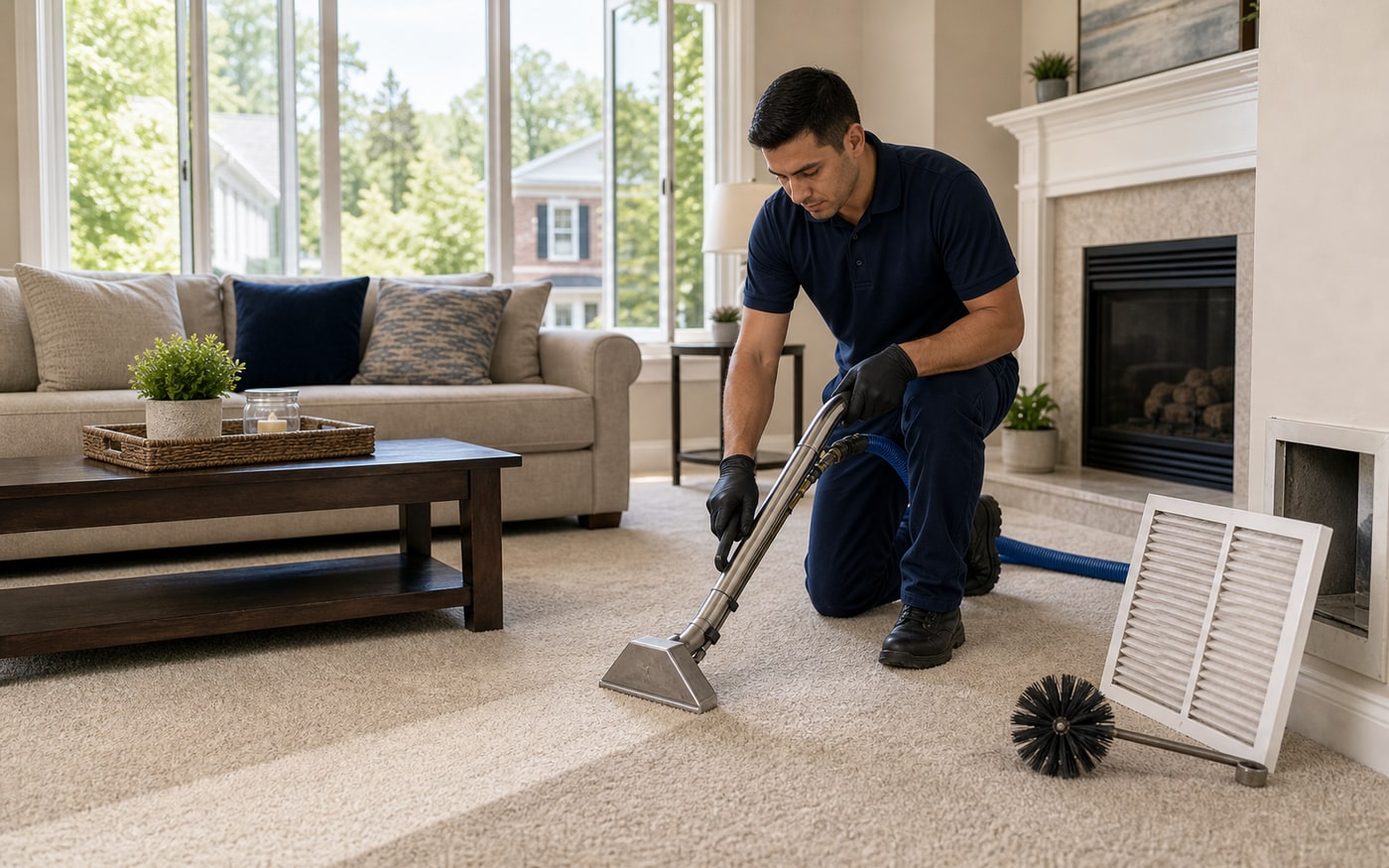
Vacuuming helps, but it only reaches the surface and can even kick fine particles back into the air. A professional carpet cleaning with hot-water extraction pulls trapped pollen, dust mites, and dander out of the base of the fibers — a noticeable reset for allergy sufferers. Spring, right after peak tree pollen, is the ideal time to schedule it.
2. Clean your air ducts
If it’s been more than a few years, an air duct cleaning clears the dust and allergens built up in your supply vents, returns, and main ducts, so your system circulates cleaner air instead of recycling old pollen. Add a sanitizer for extra peace of mind, especially in humid months when mold can take hold in ductwork.
3. Build simple habits
- Change HVAC filters more often during pollen season — monthly, and a MERV 8–11 filter if your system is rated for it.
- Control humidity. Keeping indoor humidity in a comfortable mid-range discourages dust mites and mold; run AC or a dehumidifier on muggy days.
- Vacuum with a HEPA-filter vacuum, slowly, so allergens are captured instead of redistributed.
- Wash soft goods regularly — pet bedding, throw blankets, and washable rugs hold pollen and dander; wash them in hot water during peak season.
- Leave shoes at the door to stop tracking pollen across the carpet.
- Keep windows closed on high-pollen days, especially dry, breezy mornings when counts spike.
Where allergens hide in your home
Knowing where the load actually collects helps you target your effort:
- Carpet and area rugs — the single biggest soft-surface reservoir; foot traffic re-releases trapped pollen and dander into the air.
- Ductwork and vent covers — dust and pollen settle here and get blown back out every cycle.
- HVAC filter — does its job until it clogs, then lets particles bypass into the system.
- Upholstery, drapes, and bedding — fabric grabs and holds allergens; wash or vacuum what you can.
- Entryways — where most pollen enters on shoes and pets; a doormat and shoes-off habit stop a surprising amount at the door.
A simple Richmond allergy-season game plan
You don’t need to do everything at once. A practical order:
- Early spring: Replace your HVAC filter and start changing it monthly.
- After peak tree pollen: Book a professional carpet cleaning to flush the season’s buildup.
- If ducts are overdue (3–5+ years): Add an air duct cleaning so your system stops recirculating old pollen.
- All season: Vacuum with HEPA, wash soft goods, keep windows shut on high-count days, and run AC/dehumidifier to hold down humidity.
How professional cleaning actually helps
The two biggest allergen reservoirs in a home are the carpet and the ductwork — exactly the two places routine cleaning can’t reach. Hot-water extraction flushes embedded pollen, dander, and dust mites out of the carpet’s base; duct cleaning removes the buildup your HVAC would otherwise recirculate. Done together before peak season, they reset both reservoirs at once. Many Richmond households pair them in a single visit for that reason. If pet dander is part of your allergy picture, our pet treatment add-on targets it at the source during the carpet clean — see our guide on removing pet stains and odor for more.
FAQ
When is allergy season worst in Richmond? Tree pollen peaks in spring (roughly late February–May), grass through summer, and ragweed in the fall until the first frost — so sensitive households feel it much of the year.
Does carpet cleaning really help with allergies? Yes. Carpet traps pollen, dust mites, and dander, and foot traffic re-releases them. Hot-water extraction removes those allergens from deep in the fibers in a way vacuuming can’t.
How often should I clean air ducts for allergies? Generally every 3–5 years, but sooner if you have allergies, pets, or notice dust blowing from the vents.
What MERV filter should I use during pollen season? A MERV 8–11 filter captures fine pollen well while maintaining airflow in most home systems. Change it monthly during peak season.
A cleaner home through allergy season
You can’t control Richmond’s pollen, but you can control how much of it lives in your home. CarpetPros can handle the carpet and air duct cleaning side with one local team and upfront pricing — see our pricing or book online before the next pollen wave.